
What Documentation Is Required to Secure a U.S. Work Visa?
Sept. 22, 2026
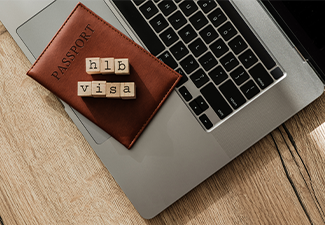 Waiting on a work visa can make even simple plans, like signing a lease or planning a trip home to see family, feel like they're on hold indefinitely. You've probably already spent hours reading through government instructions that raise more questions than they answer, and that kind of uncertainty is exhausting even for people who are usually good at handling paperwork.
If your employer has offered you a position in the United States, or you're trying to sponsor an employee of your own, knowing exactly what documentation a U.S. work visa requires can be the difference between a smooth approval and months of back-and-forth with immigration officials. I'm Paul D. Cass, and I help both employees and employers put together applications that hold up under close review.
Based in Los Angeles, California, I serve residents in Burbank, Inglewood, Glendale, Pasadena, and throughout Los Angeles County, Orange County, Riverside County, and San Diego County who want to get it right the first time. Reach out today so I can review what your case needs.
Which U.S. Work Visa Category Fits Your Situation
Work visas aren't one-size-fits-all, and the category you fall under determines exactly what paperwork you'll need. An H-1B for occupations that require particular technical training asks for different proof than an L-1 for employees transferring within the same company, and both differ again from visas built around extraordinary ability or investment.
Before gathering a single document, it's worth confirming which category actually matches your job offer or business plan, since filing under the wrong U.S. work visa category wastes time you don't get back.
Your employer's role matters here too. Some categories require the employer to file on your behalf, while others allow you to petition for yourself. Knowing who's responsible for which piece of the application keeps both sides from assuming the other has already handled it.
It also helps to know roughly how long each category takes to process, since that timeline should shape when you start gathering documents. A category with a months-long backlog rewards early preparation far more than one that typically moves in weeks.
Core Documents Every U.S. Work Visa Petition Needs
Regardless of category, most U.S. work visa petitions share a common documentation backbone. Missing any of these pieces is one of the fastest ways to receive a request for additional evidence. Here's what's typically required:
Valid passport: Current and, in most cases, valid for at least six months beyond your intended stay.
Employer petition and support letter: A formal filing plus a detailed letter describing the position and your qualifications.
Proof of education and experience: Diplomas, transcripts, or employment records that match the job requirements.
Labor and wage documentation: Records showing the position meets prevailing wage and labor condition standards.
These core documents form the foundation of your case, but they rarely tell the whole story on their own. Reviewing officers are trained to look for gaps between what's claimed and what's proven, so each document needs to support the others.
Extra Evidence That Can Strengthen Your Petition
Beyond the required basics, additional evidence can push a borderline petition toward approval. This matters most when a job title is unusual, a candidate's background doesn't follow a traditional path, or the employer hasn't sponsored a visa before. Consider including detailed job descriptions, organizational charts, client letters or contracts, and prior visa or immigration history.
None of this extra evidence is required by law, but it often answers questions before a reviewing officer has to ask them, which can shave weeks off your processing time. I generally tell clients to think of it less as padding a file, and more as answering the questions a skeptical reader would naturally have.
Common Documentation Mistakes That Slow Down Approval
Even strong candidates run into delays because of avoidable errors. Expired passports, mismatched job titles between the offer letter and the petition, and outdated wage data are some of the most common culprits I see. Each one seems minor on its own, but any single mismatch can trigger a formal request for more evidence, adding weeks or months to your timeline.
An experienced lawyer reviews every document against the others before filing, catching the kind of small inconsistency that's easy to miss when you're the one living inside the details every day. I've caught a mismatched hire date more than once, buried three pages deep in an offer letter, that would have raised an unnecessary red flag if it had gone out unchecked.
Employers make their own share of avoidable errors too, particularly when a company sponsors a work visa for the first time and doesn't yet have internal processes built around the extra documentation these filings require. A support letter written by someone unfamiliar with the specific visa category often leaves out language reviewers are trained to look for, even when every underlying fact in the letter is accurate.
A Clear Path Through the U.S. Work Visa Process
Securing a U.S. work visa comes down to preparation, not luck. When your documentation is complete, consistent, and organized before you file, much of the uncertainty in this process starts to fall away. I'm Paul D. Cass, and I've spent years helping employees and employers assemble petitions that hold up under scrutiny, so I know how much is riding on getting the details right the first time.
Located in Los Angeles, California, I serve residents in Burbank, Inglewood, Glendale, Pasadena, and throughout Los Angeles County, Orange County, Riverside County, and San Diego County who are ready to take the next step in their case. Contact me to review what documentation your specific situation requires.